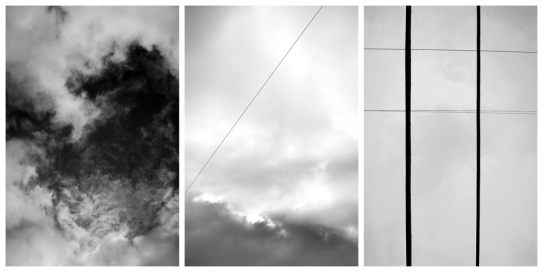
Selected work for Portland Squared Gallery Show at Pro Photo Supply, 1112 NW 19th Ave. Portland, OR. August 2013
Event Details
On May 17 and 18, more than 70 photographers converged on Portland for a 24 hour period to document a randomly assigned portion of four square miles. They used planes, cars, boats, and their own two feet as they captured our city from every possible angle. This gallery show displays the work and creativity that went into documenting the people, architecture and landscape of downtown Portland on that day.
All photography enthusiasts are invited to an opening reception, which will be held during First Thursday in the Wide Format gallery at Pro Photo Supply Thursday, August 1st, from 6pm-8pm. Snacks and beverages will be provided!
Artist Statement
Sky: Perspective Changing is an Erica J Mitchell series where she asks the viewer to look into the sky for hidden beauty. People often look into the sky for objects, but rarely take the time to observe it for it’s pure artistic integrity. The images found here remind the viewer that the open expanse of a cityscape can itself be a canvas, where clouds paint their reflections on windows, buildings offer symmetrical breaks in the wild formations of aerial spacing, and man-made items like power lines and chemical emissions add their own evocative layers to an otherwise natural canvas. Enjoy these pictures from a wildly different perspective!
Poem
Look Up
By EA Brown
It’s easy to look down,
Natural in shape and form, following the curvature of our spine,
This is who we are, how we are designed,
We bend and bow to those above, and follow, so as not to be left behind… LOOK UP
It’s easy to look down,
Following the footsteps of those who have passed before,
Attempting to reach an already open door,
Wishing not pursuing but wondering still if we can offer more… LOOK UP
I’ll press myself above,
By keeping my focus on the things out in the sky,
The shapes, colors, and patterns that sit atop my world on high,
The dreams and scenes of in betweens that become a distant savior’s lullaby LOOK UP
I’ll pull your eyes above,
Share with you the things that inspire me,
To pursue the things that others think can truly never be,
To teach the world that in the expanse above is where our minds are truly free!
Animated fishermen wax figures greet tourists at the entrance to the John Steinbeck Wax Museum in Cannery Row. December 7th, 2013. Monterey, California.
The beauty found in “The Fishermen” is the complexity of its simplicity. At first glance the scene of two mariners standing seaside dress in the robes of their professions feels like a million other pieces of decor found in wharf gift shops and causal-dining seafood restaurants located in every anywhere U.S.A town that one can recall from any childhood journey that started out with parents looking to have big fun without big spending. But what of their catch; the lady in between them behind the net? Dividing a seemingly connected sequence in two resides a character both in place and out of place . Splitting this bright scene is a figure devoid of the charm on either side, giving the entire showing an ominous feel. Is this the story of two men fighting for the affection of one woman? Is it a reflection of past, present and future? Does the net intertwine them, or is it all coincidental? Is the net what seems to make two or three separate scenes join into one, capturing the character as it captures the viewer? Though stark in contrast, the out of place portion of the picture may be the central focus holding it together, with the two main focuses simply becoming bookends to the art; two separate men tied by fate to the same webbed rope.
On March 26th, 2013, my Mother called me, crying, to tell me, my Papa (grandfather) had just died at the age of 71. I can count how many times my Mother has cried to me on one hand, which meant the news was catastrophic. I rented a car and drove 12 straight hours to my mother in Seaside, California, to the house where my Papa had lived, the house my mother was raised in and I was born into. The house where, after his divorce from my grandmother, his wife of 22 years, my Papa stayed, alone. The house where after retiring at age 55 he began a quiet, simple life. The house he dominated with his singular presence.
This house and my Papa have been stable points throughout my life. I moved around through parents, families and states. I always knew no matter how many years went by or how many things in my life changed that when I would return to his house he and it would be the same.
When I arrived in California, my mother and I began a long process of understanding, accepting and letting go. These photographs are my exploration of this process, an archaeology of the house, the things, my mother, and myself. I knew that in time my mother would remove his things and assert her own identity throughout the house. Over the next 8 months I would photograph our experience, recording the patterns and habits that remained before change would finally come.
About the Project
This project is both a record of a life and a discovery of new characters and symbols in the objects one leaves behind. Erica J Mitchell likewise transforms her own image and that of her mother beyond ordinary portraiture, casting them as characters in a greater myth of familial progression and the lives of objects. As Joan Kron tells us in the article “The Semiotics of Home Decor,” “the furnishings of a home, the style of a house, and its landscape are all part of a system — a system of symbols…Possessions speak a language we all understand, and we pay close attention to the inflections, vernacular, and exclamations.” In The Patriarch, Mitchell’s objects speak for themselves, with all their varying inflections and exclamations. One is reminded of the Raymond Carver story “Why Don’t You Dance?” in which a young couple stumbles upon what they assume is the yard sale of a man who has reassembled the entire contents of his house outside on the front lawn. They move around through his “rooms,” testing out and ultimately purchasing his life. With this series, Mitchell offers viewers a chance to help her honor an important figure in her own life, but also to locate something resonant, something personally symbolic, in the objects she lets live newly on their own.
Poem
The Patriarch
by Erica
The Patriarch has died
His soul has left
but the patterns of his life can be read
in the wear marks of furniture and daily recorded notes
Still and quiet, his identity is preserved